Sold My Seoul: Cheongsan Supa
"Sold My Seoul" is a play on the city's official tagline "Seoul My Seoul" and draws attention to destruction of historically valuable neighborhoods that have the "transitional" style of architecture defined by low-rise brick buildings with the traditional Hanok tiled roofs. Along with the redevelopment, the independent shops found in those neighborhoods are also being erased. The goal is to identify neighborhoods that the city has designated for demolition and redevelopment and within those neighborhoods, pick individual buildings worth saving as buildings for preservation and adaptive reuse.
Project timeline: 3 months
- 1st month: identifying neighborhoods designated by the city for demolition.
- 2nd month: documenting through urban sketching the significantly historically valuable buildings that will be destroyed in those neighborhoods.
- 3rd month: social media campaign for awareness and support to preserve and convert those buildings into art spaces.
My Role: Product and Performance PM, Systems Designer, Development, Analytics
Selected Tools and Languages: Raw Physical Drawing and Painting Materials, Adobe CC (Photoshop, Illustrator, Premiere Pro, FireFly), Blender, HTML, CSS, JavaScript (including React), Gemini, chatGPT
Team: Me, USKSeoul, Korea Heritage Service, Urban Sketchers International, and CIVICUS
Goals and Objectives
1. Start from Existing Real Estate First identify neighborhoods that the city has designated for demolition and redevelopment, focusing on low‑rise, “transitional” buildings with historic or cultural value (brick + Hanok roofs, and independent shops). Within those neighborhoods, pick individual buildings worth saving as potential candidates for preservation and adaptive reuse.
The challenge is to systematically locate and verify demolition‑designated neighborhoods in Seoul and, within them, to define clear, defensible criteria for selecting a few “transitional” low‑rise brick‑and‑Hanok buildings and independent shops that can be argued as culturally significant enough to merit preservation and adaptive reuse, all within a short, three‑month grant period and in a politically sensitive redevelopment context.
2. Document and Build a Cultural Case
Document these buildings through on‑site drawing, photography, and narrative, creating a visual and emotional record of what is at risk. This documentation feeds into a heritage funding / heritage service track, positioning the building as a cultural asset rather than just a piece of real estate.
This would be addressed by planning a focused fieldwork routine for each selected building: repeated on‑site sketching sessions at different times of day, documentary photography of architectural details and street life, and short interviews or observations distilled into written vignettes that capture memories, routines, and moods attached to the place. The drawings and photos would be edited and sequenced alongside bilingual captions and narrative texts to form a small but coherent dossier, essentially a “heritage packet” for each building, that highlights its architectural character, social role, and emotional resonance for residents and visitors. That packet can then be formatted as a lightweight PDF or web page suitable to accompany or inform heritage funding applications and consultations, presenting the building as a cultural and social asset with a documented community story, rather than only a developable parcel in planning documents.
3. Legal and Civic Leverage
Make a collaboration with a heritage preservation group and CIVICUS (global civil‑society network), the goal is to transfer the building into ownership or stewardship by a historical or heritage society. Then use frameworks like South Korea’s Artist Welfare Act and Korea Heritage Service mechanisms to make a legal and policy argument for its preservation and cultural reuse.
The outcome would be a concrete pathway for turning an at‑risk building into a protected cultural space, backed by both civil‑society partners and Korean legal frameworks. By collaborating with a heritage preservation group and CIVICUS, you would aim to move the building out of purely speculative real‑estate logic and into the ownership or stewardship of a heritage or historical society, giving it an institutional guardian. Using mechanisms from the Artist Welfare Act and Korea Heritage Service, this coalition could then craft a formal legal and policy case that frames the site as essential cultural infrastructure and proposes viable models for its preservation and reuse as an art space or residency, rather than demolition.
4. Financial and Program Design
Parallel to the legal/civic work, there is financial and legal scoping: how to structure ownership, revenue, and compliance so the building can function as an art space / residency. Heritage funding plus residency program design turn the building into an artist residency / new space whose profits support new housing acquisition or space for artists.
The result of this process is a financially and legally viable model for turning a once‑threatened building into a sustainable art space or residency whose operations actively fund further cultural and housing initiatives for artists. By scoping ownership structures, revenue streams, and regulatory compliance in parallel with the legal and civic work, you end up with a blueprint for how the building can legitimately function—who owns or stewards it, how income is generated (rent, programs, residencies), and how it stays within zoning, tax, and heritage rules. When heritage funding is combined with a well‑designed residency program, the building itself becomes a working piece of cultural infrastructure: artists use and animate the space, while any surplus revenue can be earmarked for acquiring additional housing or studio space, creating a small, regenerative ecosystem rather than a one‑off preservation win.
Example Inquiry for Urban Sketchers
1. What is the main idea/subject of your proposal - how will your drawings tell a story?
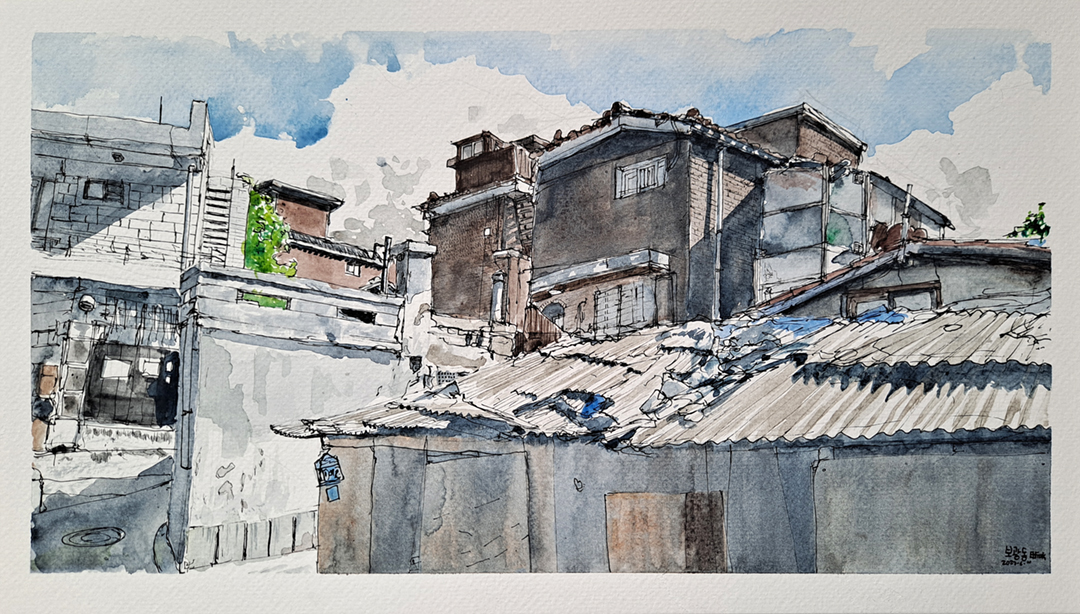
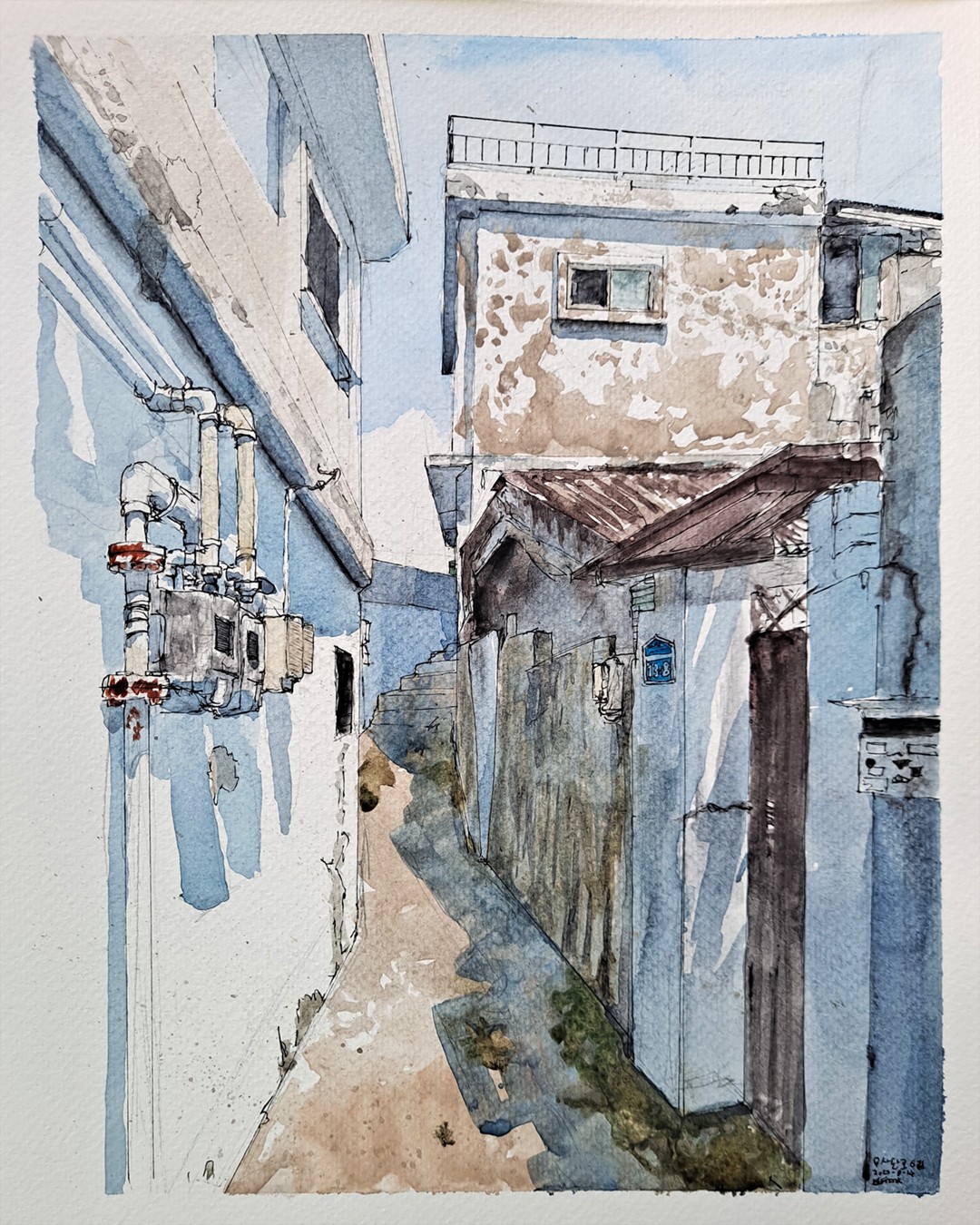
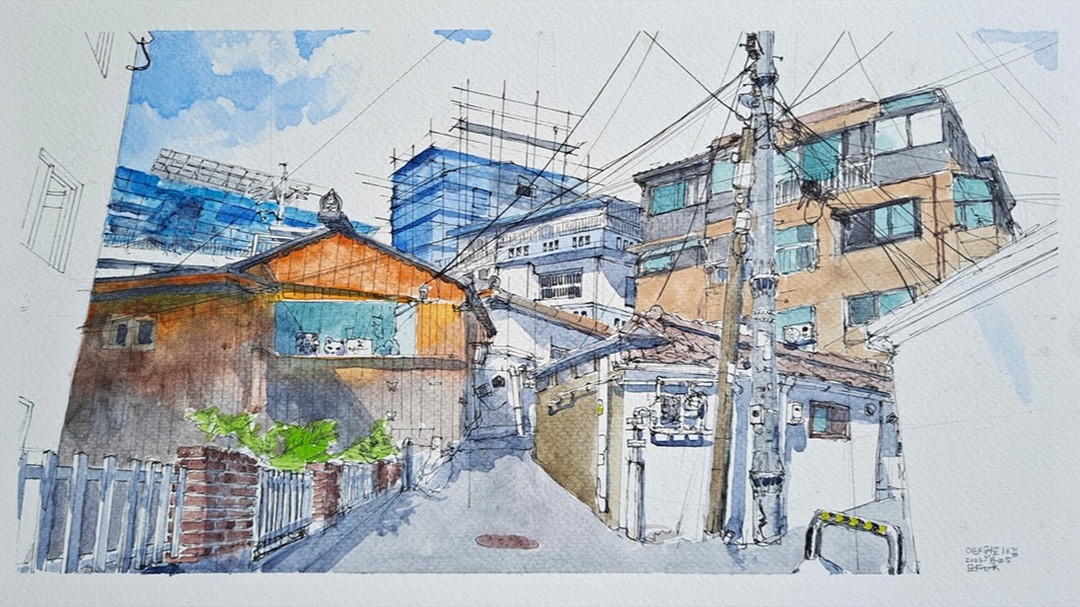
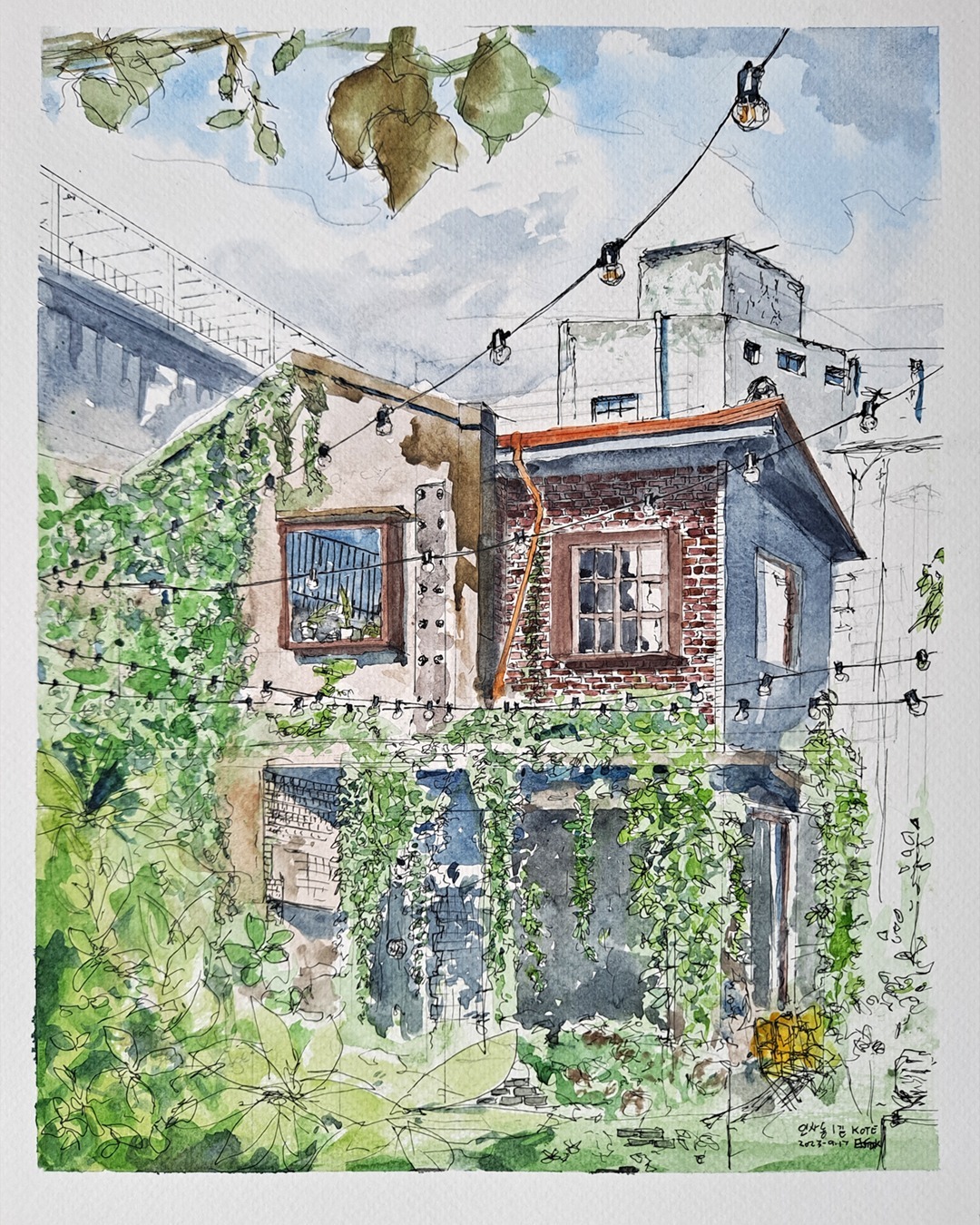
The main subject of my proposal is the rapid erasure of Seoul’s “transitional” architecture (low‑rise brick buildings with Hanok tiled roofs) as well as independent shops and the possibility of saving them by treating them as cultural assets rather than disposable real estate. My drawings tell this story by focusing on specific sites (The Cheongsan Supa, KOTE, Usadan, Bogwang, and Itaewon) and showing them at the precise moment before, during, or just after redevelopment pressure arrives. Across the series, viewers move from everyday scenes from a small mart, a tangled utility pole, a vintage vending machine, to the broader narrative of demolition, resistance, and potential reuse as artist spaces. The visual continuity of perspective, format, and mark‑making makes the story legible as one unfolding chapter of “Sold My Seoul.”
2. How does it fit into the larger cultural context?
This project sits inside a larger cultural context of shrinking civic space, aggressive redevelopment, and the regression of civic freedoms in South Korea, as documented by groups such as CIVICUS and in reports on the Artist Welfare Act. It also connects to global conversations about cultural heritage, housing precarity for artists, and the value of “ordinary” urban fabric that doesn’t yet qualify as traditional heritage but clearly holds memory and identity. By playing off of the city’s official slogan (“Seoul My Seoul” to “Sold My Seoul”), the project speaks directly to local branding narratives while quietly aligning with international heritage and civil‑society frameworks that see these spaces as part of a threatened cultural commons.
3. How do your drawings transmit the sense of place?
The drawings transmit a strong sense of place through precise observation of micro‑details that are specific to Seoul: the brick‑plus‑tiled rooflines, bespoke shop signs, black‑and‑yellow striped utility poles, transformers and cross‑beams, and the layered street furniture around small marts. Cheongsan Supa, for example, is rendered with its idiosyncratic signage, vintage vending machine, and the exact mess of wires overhead speak of things that are generic in type but highly specific in their arrangement here. By working at a consistent physical scale (A3, 26–38.5 cm dimensions), in ink liner and watercolor, and on site, the drawings carry atmospheric cues: sunlight and shadow on brick, narrow alleys, the proximity of neighboring buildings, and the way vintage signage crowds the visual field in these districts. This combination of architectural structure and lived urban clutter creates a sensory, not just descriptive, reading of Seoul’s disappearing neighborhoods.
4. What research are you hoping to complete in the course of your investigation?
Through this investigation, I want to map and document demolition‑designated neighborhoods, identify buildings with transitional architectural character, and understand how existing heritage and artist‑welfare frameworks could be mobilized to protect them. This includes researching city redevelopment plans, the Korea Heritage Service, the Artist Welfare Act, and case studies like KOTE, which was partially demolished but ultimately saved through local artist activism. I also aim to prototype a workflow from urban sketching to heritage case‑making to potential transfer of stewardship to heritage or arts entities including preliminary scoping of legal, financial, and residency models that could turn these buildings into artist spaces instead of sterile tower blocks. The research outcome is both visual (a body of site‑specific drawings) and structural (a documented process, timeline, and budget that others could support).
5. Why will this story be interesting and inspiring to other urban sketchers?
This story is compelling for other urban sketchers because it reframes sketching from passive observation into an active tool for advocacy: drawings become evidence, dossiers, and rallying points in the fight to preserve beloved but overlooked neighborhoods. Many sketchers already feel the grief of “drawing something just before it disappears”; this project shows a pathway where those drawings can feed into heritage arguments, social media campaigns, and even concrete outcomes like saving a building or creating an artist residency. It also offers a replicable model: urban sketchers in other cities facing similar redevelopment pressures can adapt the workflow by identifying sites, documenting them, partnering with heritage and civil‑society groups to protect their own “transitional” places. In that sense, “Sold My Seoul” is both a local love letter and a field guide for sketchers who want their lines on paper to matter in policy and in the built environment.
Impact and Results
82
Target at‑risk sites fully documented
The percentage of all demolition‑designated or pressure‑zone sites identified that are completed as full drawing‑photo‑narrative dossiers within the project period.
Why it matters: This shows how fully the follow through on each lead, indicating depth and completeness of visual reportage rather than just how many places are known.
73%
Outreach efforts resulting in active partnerships
The percentage of heritage, artist, or civil‑society organizations approached that become active collaborators or supporters of the project.
Why it matters: This indicates how compelling and translatable the work is to advocacy groups, showing the project’s ability to plug into real civic and heritage networks.
56%
Documented sites with downstream advocacy use
Documented sites whose materials are later used or cited in heritage applications, campaigns, media pieces, or policy discussions.
Why it matters: This tracks how often drawings and research move beyond documentation into concrete advocacy impact, aligning with the goal of turning sketching into a tool for preservation and reuse.